Iron and Paper: Unfolding Philadelphia's Chinatown
Pop-Up Book with crank-operated altar table
Commissioned by Art Philly as part of the What Now: 2026 Festival,
with lead support provided by the William Penn Foundation,
in partnership with Asian Arts Initiative and the Crane Community Center.
Arriving as laborers, Chinese immigrants faced racism, violence, and exclusion from the American project. Through work on the railroads and later in laundries, restaurants, and other industries, they began building communities and making a home in a country that often sought to exclude them. In Philadelphia, institutions such as Holy Redeemer and the Chinese Christian Church and Center became important anchors for an emerging Chinatown. For generations, residents have banded together to resist displacement and predatory development, protecting and sustaining a vibrant neighborhood that has endured for more than 150 years.
In the title Iron and Paper, Iron refers to the table and machinery, modeled in part after the “Iron Chink,” a racist name given to a mechanized salmon-processing machine introduced in the early twentieth century to replace Chinese cannery labor. Paper refers both to the pop-up book and to the history of Paper Sons and Daughters, Chinese immigrants who used purchased or fabricated identity papers to enter the United States during the Chinese Exclusion era.
In this work, Iron and Paper—materials tied to both exclusion and ingenuity—are transformed through craft and engineering. Working together, they unfold a layered story of Chinese American labor, migration, resistance, and belonging.
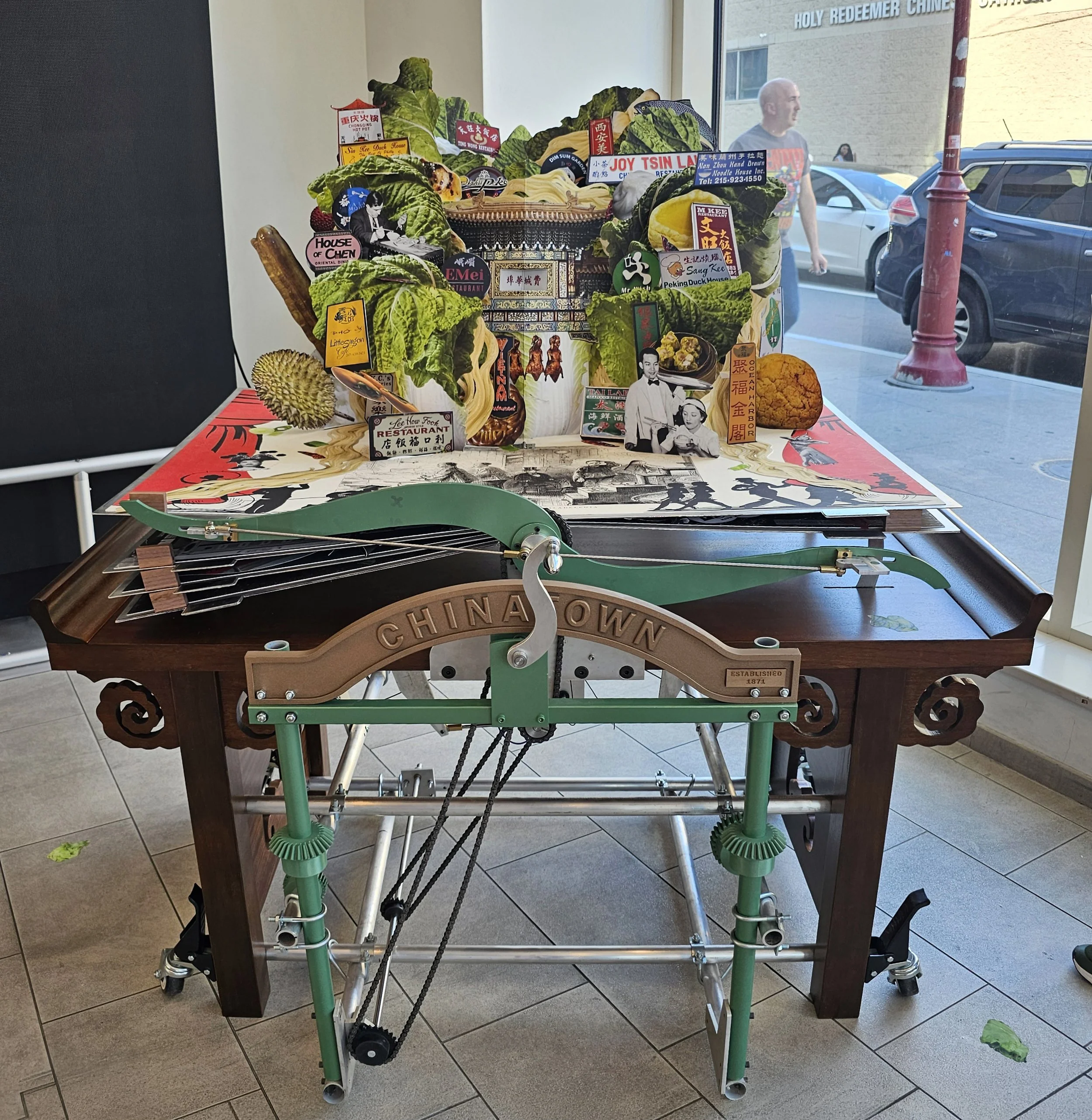
Iron and Paper at Crane Community Center, Chinatown, 2026
Exclusion → Survival → Community → Resistance → Celebration
Spread 1. The Founding of Philadelphia Chinatown
Exclusion, Migration, and Survival
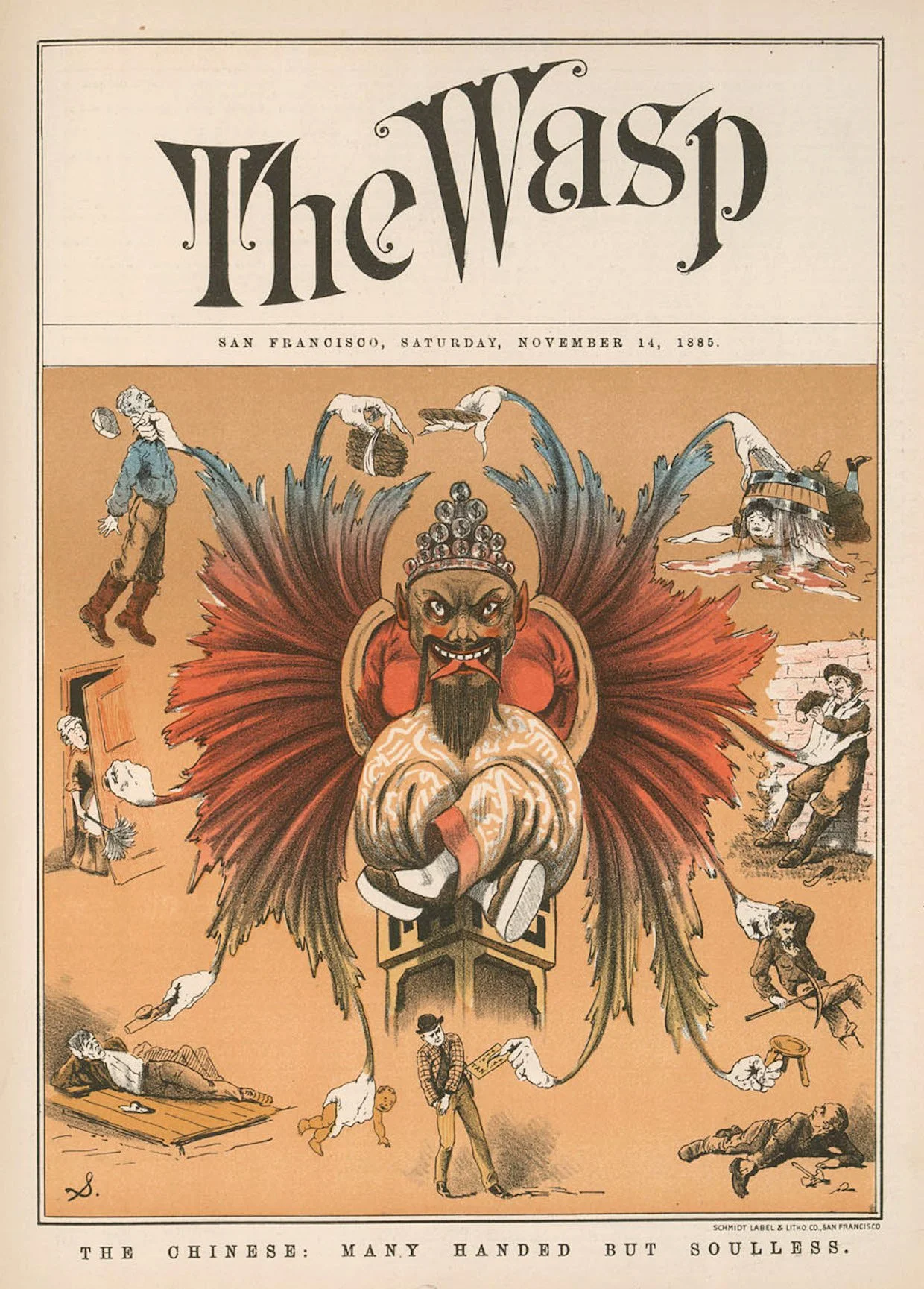
Philadelphia’s Chinatown emerged from the violent displacement of Chinese immigrants from the American West during the 1870s and 1880s. Chinese laborers had been recruited to perform some of the most dangerous work on the transcontinental railroad, making up most of the Central Pacific Railroad workforce that completed the line in 1869. Despite their essential labor, they were paid less than white workers and faced escalating racism, economic hostility, and mob violence across the West. This anti-Chinese sentiment culminated in the Chinese Exclusion Act of 1882, which barred Chinese laborers from immigrating to the United States and prohibited Chinese immigrants from becoming naturalized citizens. It was the first U.S. law to exclude an entire group based on race and nationality. Earlier legislation, including the Page Act of 1875, severely restricted the immigration of Chinese women, preventing many families from forming and contributing to the development of predominantly male “bachelor societies” in Chinatowns across America.
Spread 2. Chinatown Flourishes Through Food and Family
Restaurants as Survival and Opportunity
Around 1870, Lee Fong opened a laundry on Race Street, helping to lay the foundation for Philadelphia’s Chinatown. In a city known as the “Workshop of the World,” Chinese immigrants were largely excluded from industrial labor and were pushed into occupations considered noncompetitive with white workers, including laundries, restaurants, domestic service, and small import businesses.
Chinese restaurants became one of the few pathways to economic survival and family reunification for Chinese immigrants in America. While exclusion laws severely restricted immigration, a loophole in U.S. immigration policy allowed merchants, including restaurant owners, to sponsor workers and eventually bring family members to the United States. As a result, Chinese restaurants spread rapidly across the country and became deeply woven into American culture.
Chop Suey played a particularly important role in transforming Chinese food into a mainstream American phenomenon. Restaurants adapted flavors and presentation to appeal to American audiences while creating glamorous, theatrical dining spaces that introduced many Americans to Chinese culture through food. What began as cheap (the literal translation is odds and ends or scraps) working-class food evolved into a national culinary identity.
Spread 3. Chinatown: More Than a Place to Eat
Community, Culture, and Belonging
Philadelphia's Chinatown is far more than a dining destination. It is a neighborhood shaped by generations of immigrants who built institutions, preserved traditions, and created a sense of belonging despite exclusion and discrimination.
Churches, family associations, schools, and community organizations became vital anchors of neighborhood life. These institutions provided housing, language assistance, social services, and cultural continuity for newcomers navigating an unfamiliar country. Today, Chinatown remains a living cultural center where traditions are preserved, celebrations are shared, and new generations continue to redefine what it means to be Chinese American.
Spread 4. Resisting Erasure: Protest, Development, and Resilience
For decades, Philadelphia’s Chinatown has faced repeated threats from development projects that endangered homes, businesses, and community spaces. In 1966, community members were informed that the construction of the proposed Vine Street Expressway would destroy Holy Redeemer Catholic Church and School. This became the beginning of organized protests, coalitions, and public campaigns to resist displacement and preserve the neighborhood’s cultural identity. These protests led to the founding of the Philadelphia Chinatown Development Corporation (PCDC). Despite ongoing pressure from urban development, Chinatown endures through collective action, intergenerational organizing, and deep community ties.
Spread 5. Celebrating Chinatown
Chinatown is a living part of Philadelphia’s present and future. As we move forward, it’s essential to recognize the struggles and triumphs of communities like Chinatown, so we can work together to ensure that these vibrant spaces continue to thrive for generations to come. It is a symbol of cultural survival and a place worth celebrating.
Image sources:
The Philadelphia Chinatown Development Corporation (PCDC)
Temple University Archives
Chinese Christian Church and Center
Deborah Wei
Dave Kyu
Colette Fu
UC Berkeley, Bancroft Library
Library Company
National Archives
Library of Congress
Museum of Chinese in America
Hawaii State Archives
Calisphere
University of California
Special Thanks to:
The Philadelphia Chinatown Development Corporation (PCDC)
Rodney Atienza
Temple University Special Collections Research Center
Harry Leong