GOLDEN LOTUS
4.25" x 3.25" x 5/8", edition of 53, $1400 (4 copies remaining)
Women’s Studio Workshop Artist Book Residency Grant, 2022
Assistance from studio manager Chris Petrone, apprentice Aurora Brush, and interns Judith Tong, Hannah Moog
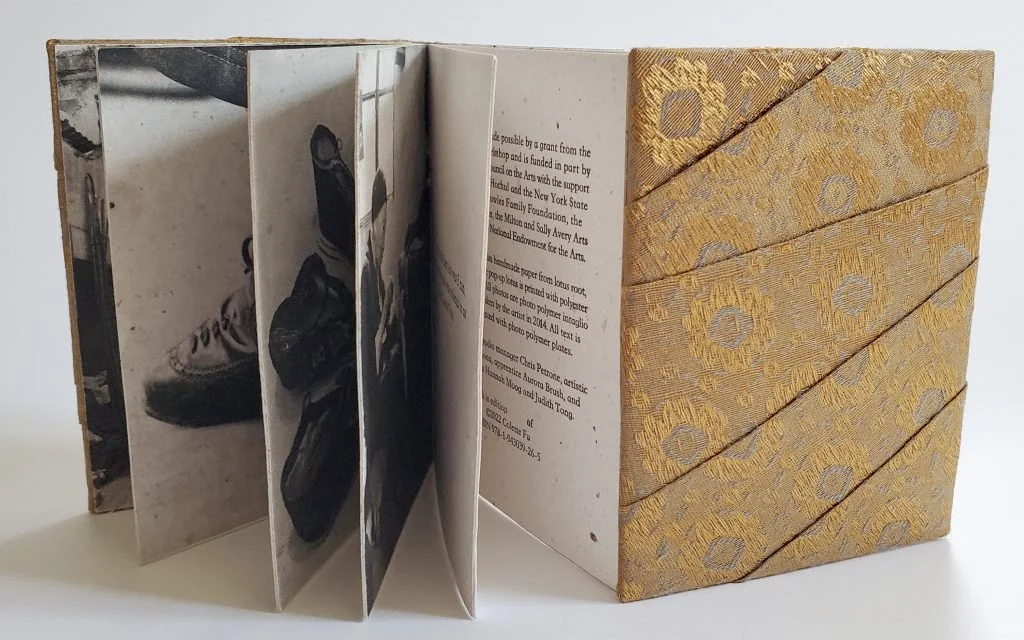
pop-up book, handmade paper, lotus root, gold dust, polyester lithography, photo polymer intaglio, letterpress, dos-à-dos binding, brocade
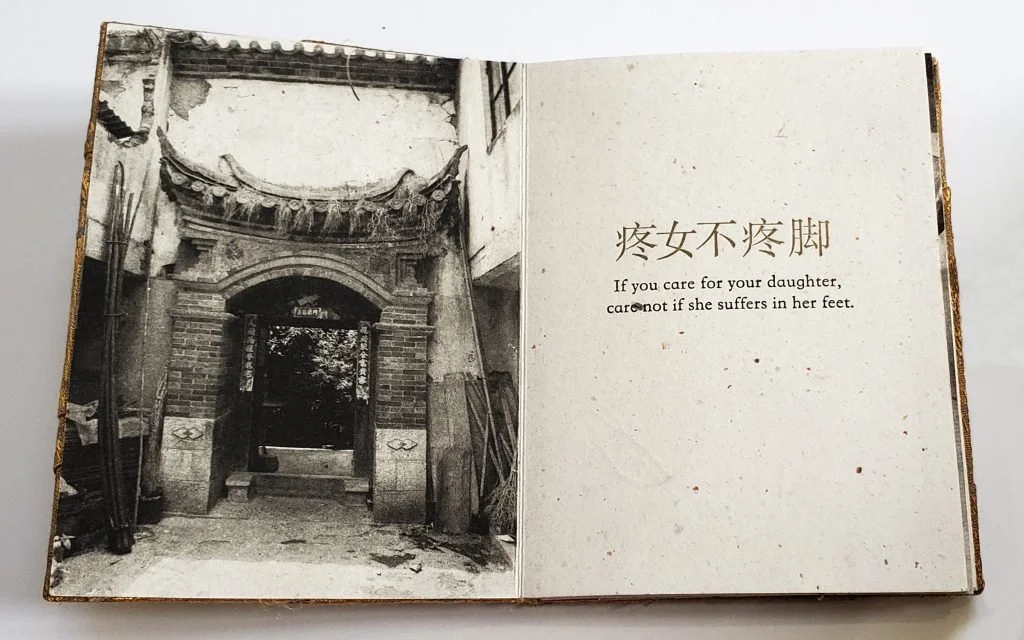
疼儿不疼学, 疼女不疼 脚。
“If you care for your son, care not if he suffers in his studies.
If you care for your daughter, care not if she suffers in her feet.”
—Old Chinese saying
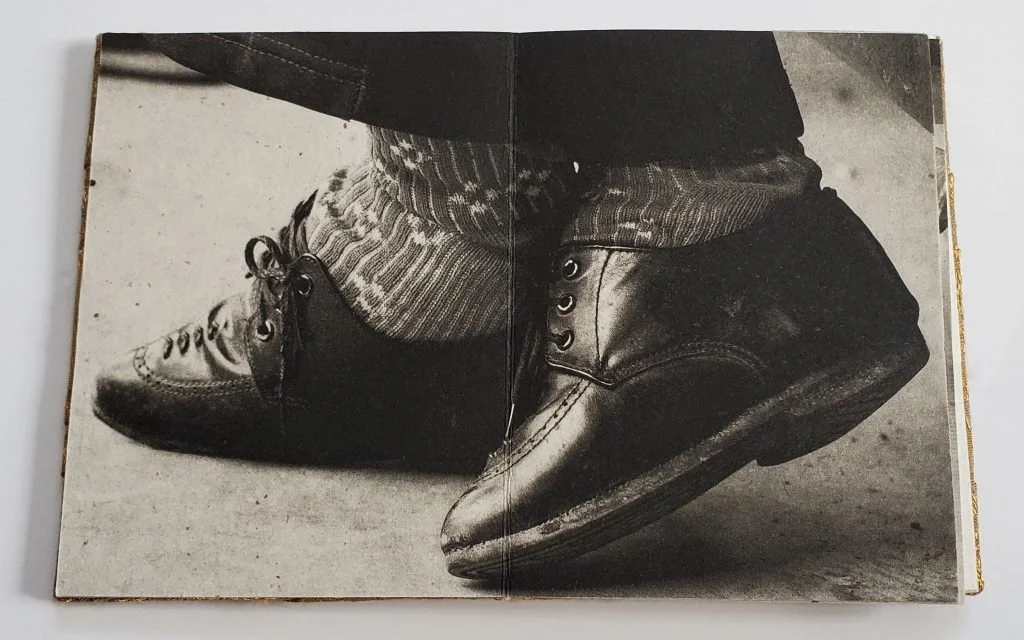
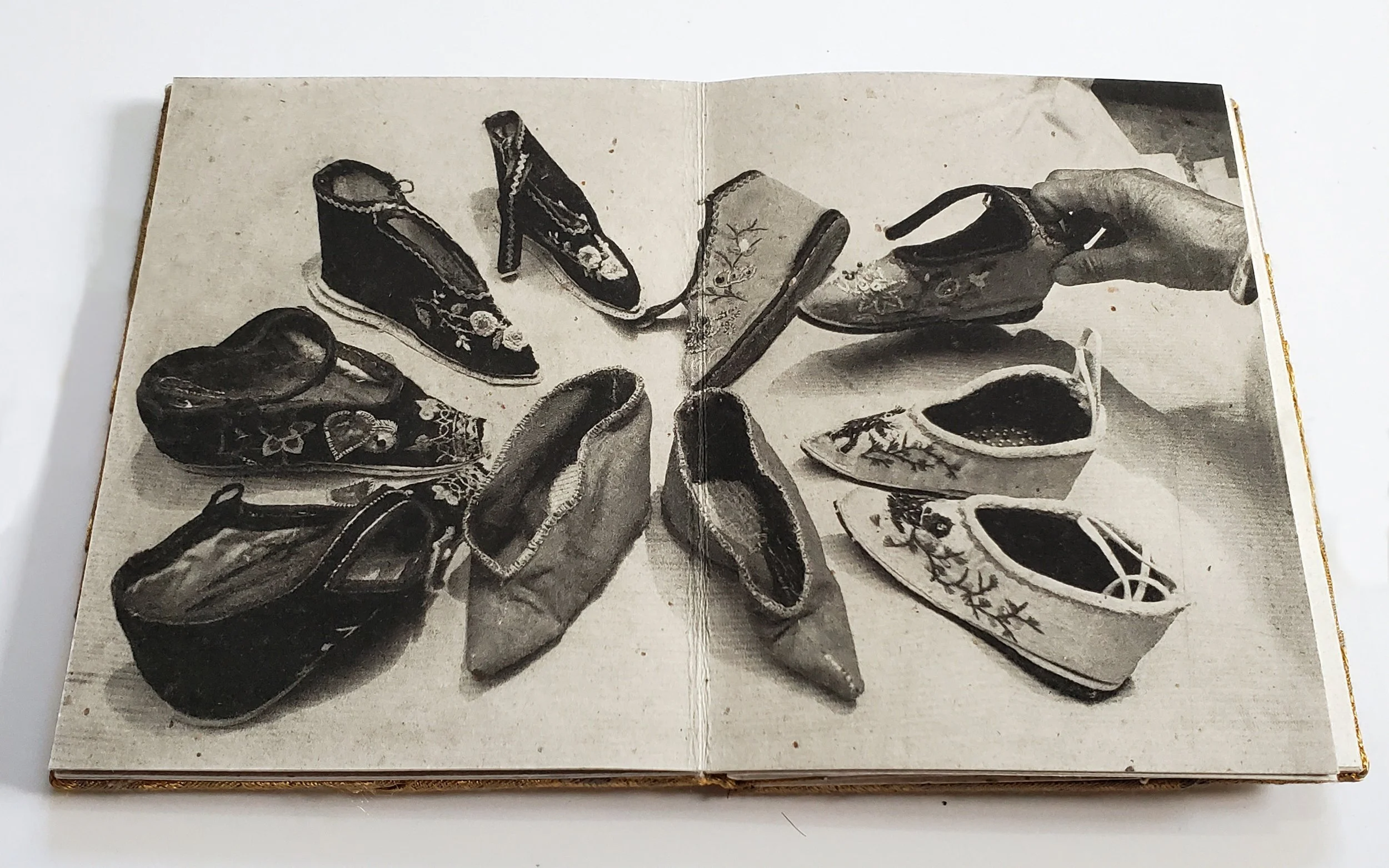
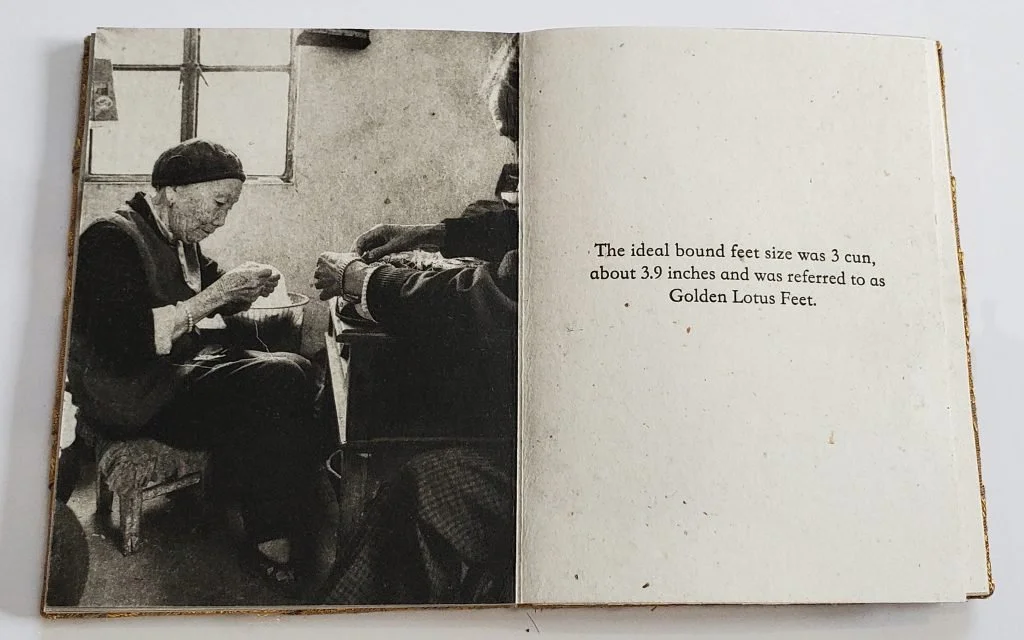
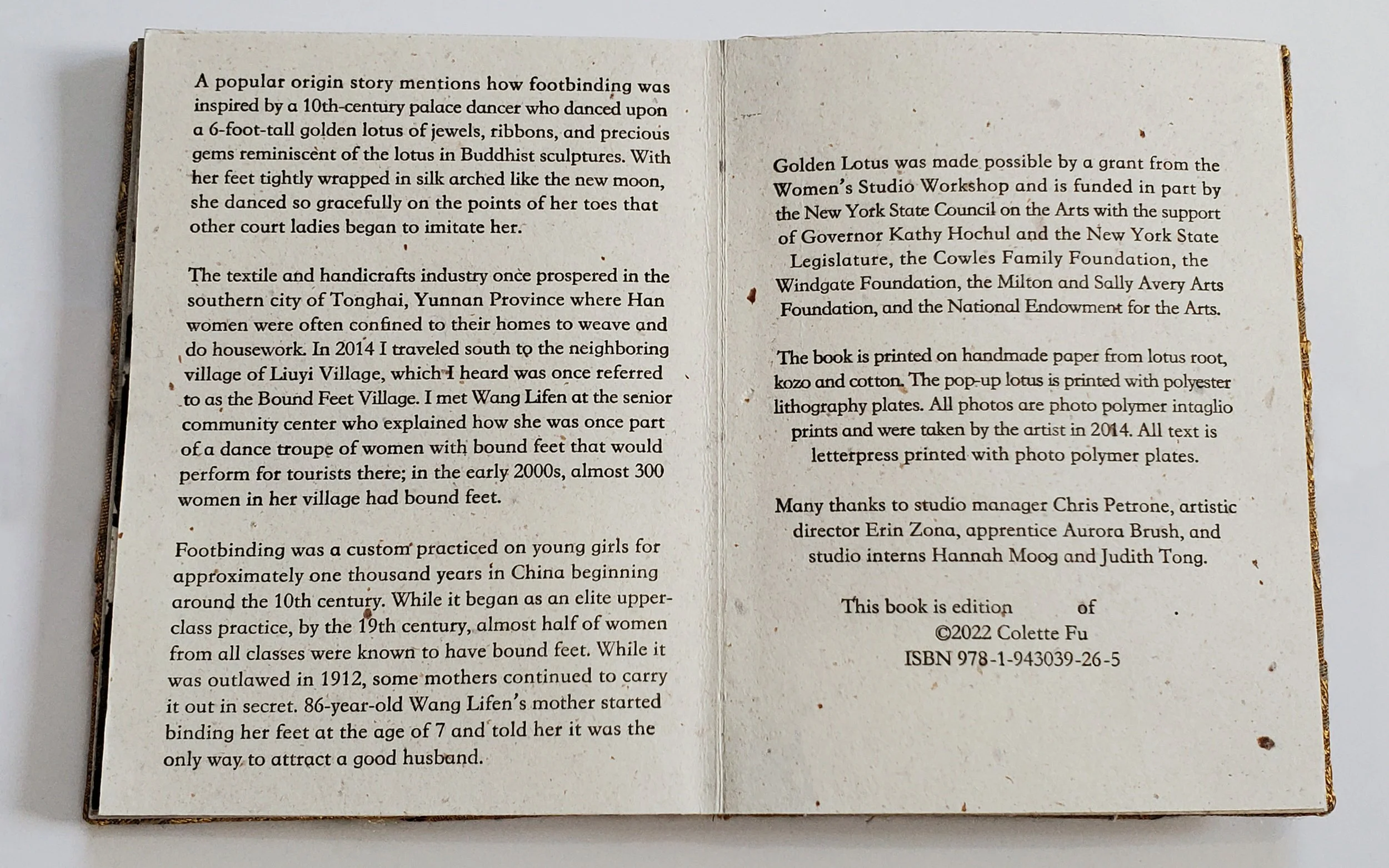
In 2014, I was an artist-in-residence at the Swatch Art Peace Hotel in Shanghai for 6 months. I taught English in Yunnan Province in the mid-90s and spent 2008 there on a Fulbright fellowship. I heard about a village in the south that was referred to as Bound Feet Village, and that there was a disco dancing troupe. So, my friend and I took the bus there, and although the dance troupe was no longer performing, we found Wang Lifen hanging out in the senior center. In the early 2000s, almost 300 women in her village had bound feet. While it was outlawed in 1912, some mothers continued to carry it out secretly. Wang Lifen’s mother started binding her feet at the age of 7 and told her it was the only way to attract a good husband.
The ideal bound feet size was 3 cun, about 3.9 inches, and was called Golden Lotus Feet. A popular origin story mentions how footbinding was inspired by a 10th-century palace dancer who danced upon a 6-foot-tall golden lotus of jewels, ribbons, and precious gems reminiscent of the lotus in Buddhist sculptures. With her feet tightly wrapped in silk arched like the new moon, she danced so gracefully on the points of her toes that other court ladies began to imitate her.
Footbinding was a custom practiced on young girls for approximately one thousand years in China, beginning around the 10th century. While it startedas an elite upper-class practice, by the 19th century, almost half of women from all classes were known to have bound feet. My great-grandmother and grand aunt on my father’s side had bound feet; my mother is from a minority group called the Yi, and they did not practice footbinding.
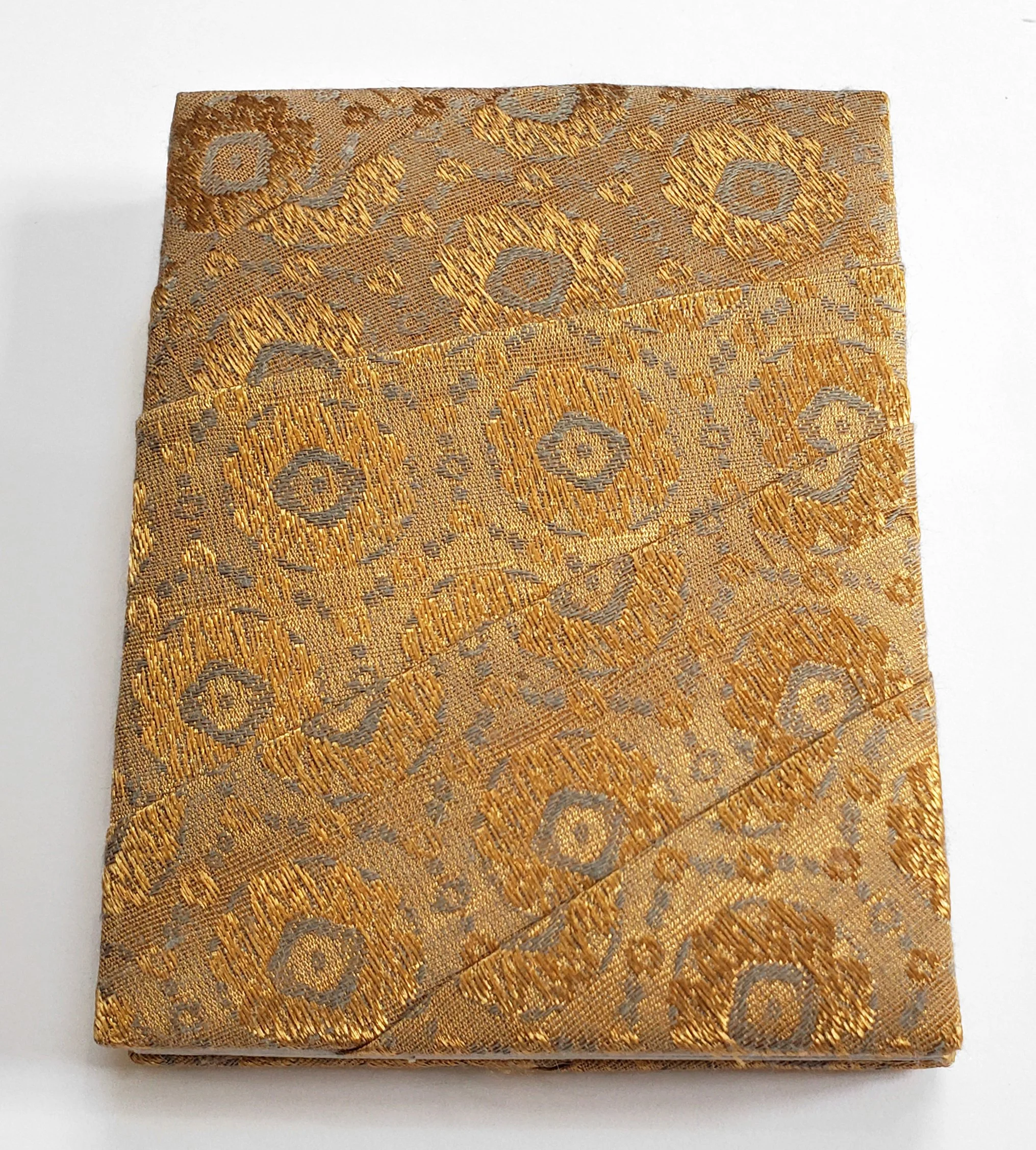
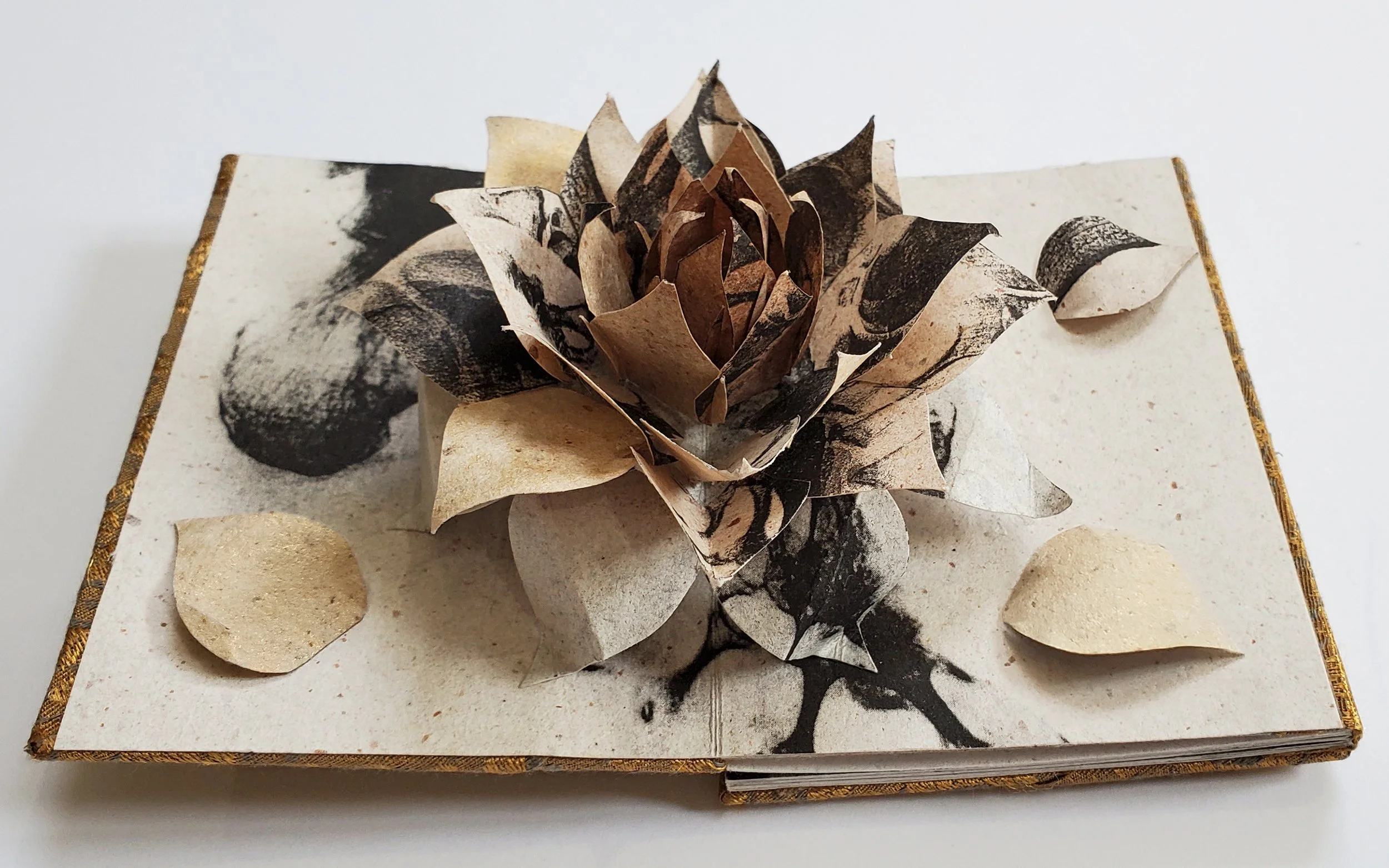
All pages of the dos-à-dos-bound book are printed on handmade paper made with lotus root, kozo, and cotton. Gold is subtly painted onto the backside of some of the petals. The pop-up lotus's size mimics the ideal bound foot of 3 cun (Chinese inches) or about 3.9 inches. The shades of the lotus intentionally go from light to dark as you approach the center to mimic the shades within the lotus root. The images on the petals are from a 1970s X-ray of bound feet combined with X-ray images of my own feet, and are printed with polyester lithography plates. As I thought the X-ray of the bound feet looked calligraphic in style, the whole book is bound with gold brocade intended for scroll making. All other photos are photopolymer intaglio prints and were taken in 2014. All text is letterpress printed with photopolymer plates.